

 English
 Italian
 Spanish
 Japanese
 Swedish
 Portuguese
 Lithuanian
 Dutch
 Korean
 Russian
 French
 German
 Arabic
Displaying Women's Blouses on Half-Figure Mannequins: Fit and Proportion
A blouse can look very different on a hanger than it does when displayed on a mannequin. The way the shoulders sit, the fabric falls across the bust, and the waistline follows the body all influence how customers perceive its cut and fit. For fashion retailers, choosing the right display form is therefore not just a matter of appearance. It is a practical decision that affects how clearly a garment's design is communicated in stores, showrooms, and visual merchandising displays.
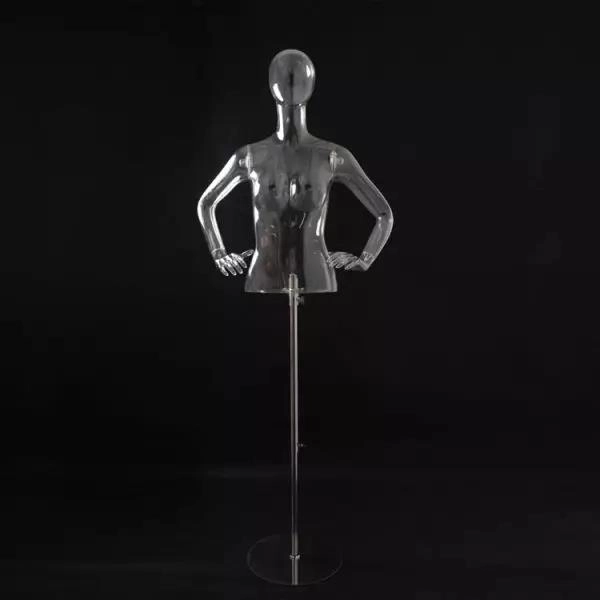
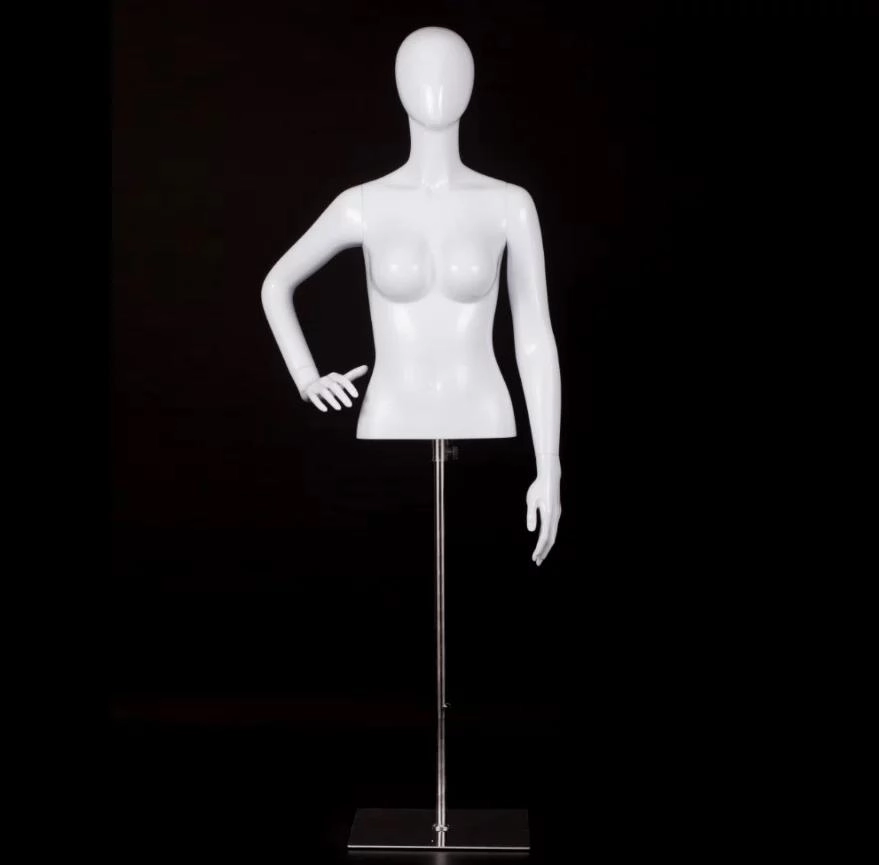
A half-figure mannequin is particularly useful when the focus is on upper-body clothing. It allows retailers to present blouses without the visual footprint of a full-body figure, making it suitable for countertop displays, shelving, window arrangements, and focused product presentations. The Female half-figure model (supporting structure) from Posh Concept Mannequins is designed for this type of display, with an 80 cm overall height, an 85 cm bust measurement, and a 64 cm waist measurement.
Understanding how these proportions interact with different blouse styles can help retailers create displays that look natural, consistent, and relevant to their target customers.
Match the Mannequin's Proportions to the Blouse Design
The first step in displaying a blouse is to consider the garment's intended silhouette. A fitted blouse, an oversized shirt, and a cropped design will not sit in the same way on a display form. The mannequin's measurements provide a reference for assessing how the garment hangs and where its key design features appear.
The 85 cm bust and 64 cm waist measurements of the Female half-figure model provide a defined upper-body shape for presenting women's apparel. These measurements are useful when planning displays for tailored blouses, fitted shirts, and designs that emphasize the waist. However, retailers should distinguish mannequin measurements from garment measurements. Clothing dimensions include ease allowance, seam construction, fabric stretch, and the intended fit, so a blouse should not be selected solely because its labeled bust measurement matches the mannequin.
For loose-fitting blouses, the display objective may be to show volume and drape rather than close body contact. Retailers can assess whether the garment falls evenly across the front and sides, whether the shoulder seams remain in the intended position, and whether the hem creates the desired silhouette.
For fitted styles, attention should be given to the bust area, waist shaping, darts, and button alignment. If the garment is pulled too tightly over the display form, the fabric may crease unnaturally or the buttons may appear strained. If it is too loose, the intended tailoring may become less visible.
Presenting Different Blouse Styles Effectively
Different blouse designs require different styling decisions. A consistent display method helps shoppers compare garments while making each design's distinguishing features easier to recognize.
For classic button-down blouses, align the center front and check that the buttons and placket sit evenly. Smooth the fabric around the bust without stretching it, and position the collar so that its shape is clearly visible. If the blouse includes a structured shoulder, make sure the shoulder seams are placed correctly rather than pulled forward or backward.
For puff-sleeve and statement-sleeve blouses, the main challenge is maintaining the intended volume. Arrange the sleeves so they retain their shape without covering the front of the garment. Where the design includes gathers or pleats, distribute the fabric evenly to prevent one side from appearing heavier than the other.
For wrap blouses and tie-front designs, position the overlapping panels and ties according to the garment's intended styling. Avoid pulling the waist too tightly just to create a more defined silhouette. The display should communicate how the design is meant to be worn, not create a shape that customers may struggle to reproduce.
Oversized blouses need a different approach. Their appeal often comes from relaxed proportions and soft fabric movement. Allow the garment to fall naturally from the shoulders and avoid excessive pinning that changes the intended cut.
The Female half-figure model (supporting structure) can serve as a consistent base for presenting these different styles. By keeping the display form consistent while changing the blouse, retailers can make comparisons between fabrics, colors, sleeve shapes, and tailoring details easier for shoppers.
Make Fabric Drape and Texture Easy to See
The fit of a blouse is only one part of the presentation. Fabric behavior also influences how a garment looks on a display form. Cotton poplin, viscose, satin, linen blends, and lightweight polyester fabrics each respond differently to gravity and handling.
Crisp fabrics tend to hold more defined folds and may emphasize the garment's construction. Softer fabrics can fall closer to the body or form flowing lines around the waist. Textured materials may require careful positioning so that gathers, pleats, and surface details remain visible.
Before placing a blouse on display, check the fabric for creases caused by storage or transport. Steam or press the garment according to its care instructions, then allow it to settle before final positioning. This is particularly important for lightweight fabrics, where small folds can make the garment appear poorly fitted.
Retailers should also pay attention to the relationship between fabric and color. Dark blouses may conceal seam details in low light, while pale fabrics can reveal unwanted wrinkles or uneven tension. Adjusting the display lighting and garment position can improve visibility without changing the garment itself.
A PC mannequin provides a defined surface for presenting clothing. The Female half-figure model (supporting structure) is manufactured from PC raw material and belongs to the Solid-Color Mannequins range. Its solid-color appearance can help keep the focus on the blouse, particularly when the garment has distinctive prints, embellishments, or fabric textures.
Use Half-Figure Forms to Improve Retail Space Planning
One practical advantage of half-figure mannequins is that they allow retailers to focus on upper-body products without allocating space to a full-body display. This is useful for stores that need to present multiple blouse styles within a limited countertop or shelving area.
With an overall height of 80 cm, the model needs to be considered alongside the dimensions of the display surface, shelf clearance, and surrounding merchandise. Retailers should measure the usable vertical space before installation, including any additional clearance required for collars, raised sleeves, or other garment details.
The display should also leave enough space around the mannequin for the blouse to remain visually distinct. When several forms are placed together, overly narrow spacing can cause sleeves to overlap and make individual products harder to assess. A balanced arrangement allows customers to compare styles without the display appearing crowded.
For a small boutique, a single half-figure form can highlight a new arrival or seasonal blouse. In a larger retail environment, several forms can be arranged to present a coordinated collection, such as workwear shirts, weekend tops, or occasion blouses.
The supporting structure should be positioned securely according to its design and installation requirements. Retailers should verify stability before adding garments, especially when displays are placed near customer walkways or on frequently accessed counters. The product's published specifications establish its overall dimensions, but installation compatibility should be confirmed against the actual display fixture.
Coordinate the Mannequin with the Overall Visual Merchandising Plan
A well-presented blouse should connect with the wider retail display rather than appear as an isolated item. Color coordination, grouping, signage, and the arrangement of neighboring products all contribute to how customers interpret a collection.
For example, a retailer presenting office blouses may group neutral colors and tailored cuts together, using consistent garment positioning to emphasize differences in collars, cuffs, and waist shaping. A summer collection may instead use lightweight fabrics and brighter colors, with the arrangement highlighting sleeve volume and flowing silhouettes.
The mannequin itself should not compete with the clothing. A solid-color form can help maintain visual consistency across different garment colors and patterns. When the blouse is the main product being promoted, keep accessories and surrounding props limited so that important design features remain visible.
Consistency is especially useful for multi-store retail brands. If each location displays garments at different angles or uses different styling standards, customers may receive inconsistent impressions of the same collection. A simple visual merchandising guide can specify how to align collars, smooth the front panel, position sleeves, and maintain spacing between forms.
For retailers working with seasonal launches, these guidelines also make it easier to update displays quickly. Staff can replace one blouse with another while preserving the same basic presentation method, reducing unnecessary adjustments during store resets.
Consider Material and Manufacturing Requirements When Sourcing
For B2B buyers, selecting a mannequin involves more than assessing its appearance. Material, dimensions, product consistency, manufacturing capabilities, and supply requirements all matter when ordering display forms for commercial use.
The Female half-figure model (supporting structure) uses PC raw material. When evaluating a PC mannequin, buyers should confirm the product specification, surface finish, color requirements, and handling instructions with the manufacturer. They should also ask for relevant information about cleaning and maintenance rather than assume that all cleaning agents or handling methods are suitable.
Dimensional consistency is important when multiple mannequins are used across a collection or store network. Buyers can use the specified 80 cm height, 85 cm bust, and 64 cm waist as reference points when checking product samples and confirming the intended display application. If a project requires additional colors, custom dimensions, or a particular supporting arrangement, those requirements should be agreed upon before production.
Posh Concept Mannequins, also known as SHANGMEI, develops mannequin solutions for fashion retail, with a focus on responsible manufacturing and material innovation. The company was founded in 2012 and introduced PC mannequins as an early part of its sustainable display approach. Its manufacturing development has since expanded to include materials such as PP, PE, and ABS, alongside further work on recycled materials and production processes.
The company reports a 10,000 m² manufacturing facility, a team of more than 100 professionals, monthly production exceeding 5,000 mannequins, and exports to more than 30 countries and regions. For retail brands and distributors, these capabilities provide useful context when discussing order volumes, production planning, and supply requirements. Specific lead times, customization options, and quality-control procedures should still be confirmed for each project.
Build a More Consistent Blouse Display
Effective blouse presentation depends on a combination of correct proportions, careful garment preparation, fabric handling, and appropriate placement within the retail environment. A mannequin that provides a clear upper-body silhouette can help shoppers assess a blouse's cut, while consistent styling makes comparisons between products easier.
The Female half-figure model (supporting structure) offers an 80 cm display height, an 85 cm bust, a 64 cm waist, and PC construction for retailers looking to present women's upper-body apparel. Its practical value depends on matching these dimensions to the garment range, confirming fixture compatibility, and maintaining consistent styling across displays.
By treating mannequin selection as part of the wider visual merchandising process, retailers can present blouses more clearly, make better use of limited display space, and maintain a more consistent appearance across stores and collections. For brands and buyers evaluating mannequin options, Posh Concept Mannequins provides a product range to consider alongside the specific requirements of the garments and retail environment.