

 English
 Italian
 Spanish
 Japanese
 Swedish
 Portuguese
 Lithuanian
 Dutch
Dutch Korean
 Russian
 French
 German
 Arabic
80 cm Female Half-Figure Mannequins: Planning Counter Display Space
Counter displays are often limited by the space available, the products being presented, and the distance from which shoppers view the merchandise. In fashion retail, a display that looks balanced on paper may become crowded once garments, accessories, signage, and lighting are added. Choosing a mannequin with suitable dimensions helps retailers use valuable counter space without making the display difficult to navigate or the merchandise hard to see.
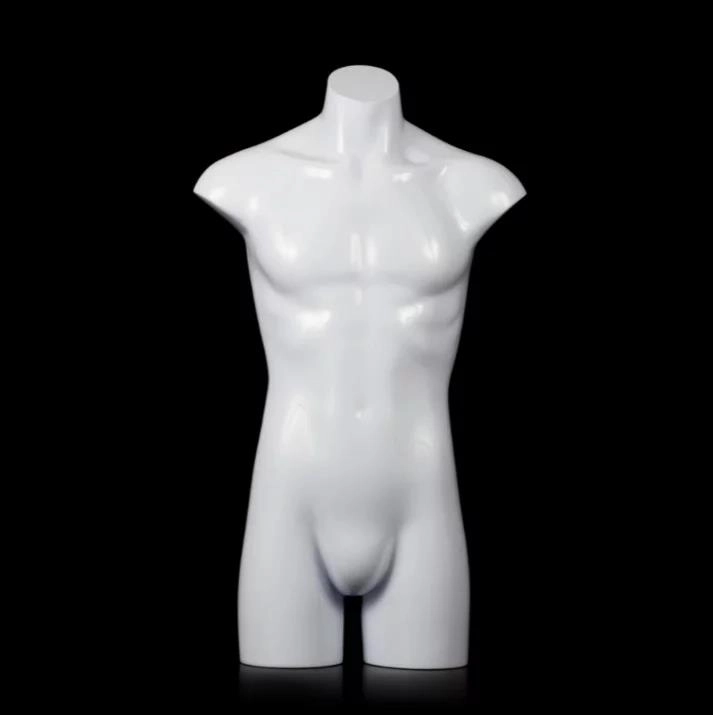
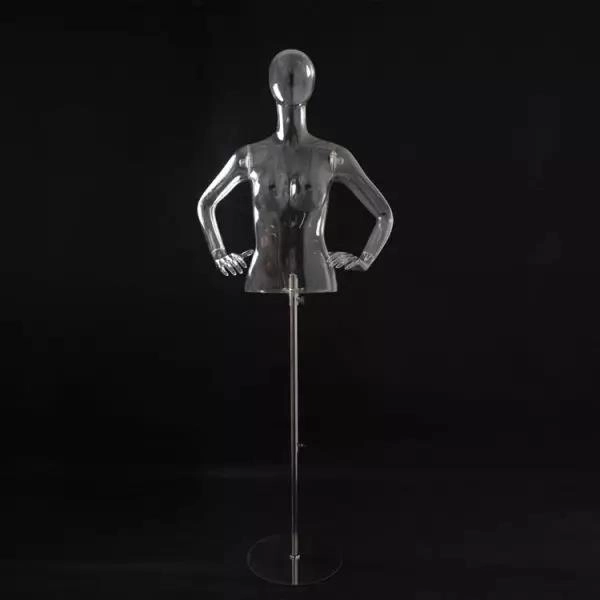
The Female half-figure model (supporting structure) is designed for retail environments where an upper-body presentation is more practical than a full-body mannequin. With an overall height of 80 cm, a bust measurement of 85 cm, and a waist measurement of 64 cm, this PC model offers a defined form for displaying selected apparel while allowing retailers to plan the surrounding space more precisely.
For visual merchandising teams, the key is not simply whether a mannequin fits on a counter. It is how its dimensions, the garment being displayed, and the surrounding retail elements work together to create a clear and functional presentation.
Understanding the Dimensions Before Planning a Display
Before selecting a counter location, retailers should evaluate the mannequin's measurements against the available display area. The height, bust, and waist dimensions influence how much visual space the form occupies and how garments sit when displayed.
The main specifications of this model are:
Material: PC
Overall height: 80 cm (31.5 inches)
Bust: 85 cm (33.46 inches)
Waist: 64 cm (25.2 inches)
Model type: Female half-figure model with supporting structure
The 80 cm height provides a useful starting point for calculating the vertical space required. However, the total clearance should not be based on mannequin height alone. A fitted top, layered garment, collar, or raised shoulder detail may affect the final display height. Retailers should also account for the counter surface, any supporting components, overhead shelving, and nearby signage.
The bust and waist measurements are equally important when preparing garments. Clothing designed for a substantially different form may hang loosely, pull across the chest, or require additional adjustment. Checking garment measurements before installation can reduce unnecessary changes during visual merchandising.
Calculating the Counter Space Required
A counter display needs enough room for the mannequin itself and for the products and materials placed around it. Although the model's height is specified, the available information does not establish its complete footprint or the dimensions of its supporting structure. Retailers should confirm those measurements with the supplier before finalizing a fixture layout.
Start by measuring the usable length, depth, and vertical clearance of the intended counter area. Then identify the position of the mannequin in relation to the counter edge, neighboring products, and the direction of customer movement.
For example, a mannequin positioned near the front of a counter may attract attention from shoppers approaching the display. However, if its placement interferes with product access or makes the counter feel crowded, moving it farther back may produce a more practical arrangement.
A simple planning process can help:
Measure the usable counter surface rather than relying on the counter's advertised overall dimensions.
Confirm the mannequin's footprint and the clearance required by its supporting structure.
Allow space for the displayed garment to fall naturally without covering adjacent merchandise.
Check the sightline from the main customer approach.
Review the layout with any signage, product trays, and lighting in their intended positions.
This approach gives the retail team a more realistic picture of the finished display before products are installed.
Choosing Garments That Work With a Half-Figure Form
The effectiveness of a half-figure mannequin depends partly on the type of clothing being presented. Because the model focuses on the upper body, it is particularly relevant to displays where the garment's neckline, shoulders, sleeves, chest, or overall silhouette deserves attention.
Retailers can consider using it to present blouses, shirts, selected knitwear, lightweight jackets, and other upper-body garments, provided the garment dimensions and styling suit the form. The model's 85 cm bust and 64 cm waist measurements should be checked against the intended clothing rather than treated as universal sizing references.
Garment preparation also makes a noticeable difference. Smooth the fabric across the shoulders, position sleeves consistently, and remove visible creases before placing the mannequin on the counter. If the garment includes buttons, zippers, or decorative details, arrange them so that shoppers can identify the design without needing to handle the display.
For layered styling, consider how each additional piece changes the visual volume. A jacket over a shirt may create a stronger focal point, but excessive layering can make a compact counter display look heavy. A single, well-presented garment may communicate the product's shape more clearly.
The Female half-figure model can therefore serve as a practical option when the merchandising objective is to highlight upper-body apparel rather than devote counter space to a complete standing figure.
Balancing Visibility and Customer Access
A mannequin should attract attention without preventing customers from seeing or reaching the products nearby. This balance becomes especially important on checkout counters, promotional tables, accessory counters, and other fixtures that serve more than one purpose.
Start by identifying the main visual priority. If the mannequin is intended to showcase a new collection, position it where the featured garment can be seen from the principal approach. If the counter also holds folded clothing or packaged accessories, arrange those items so that they remain accessible.
Height relationships matter as well. An 80 cm half-figure may occupy a significant portion of the vertical view on a compact counter. Placing tall signage directly behind it can create a cluttered background, while low product trays positioned too close to the front may compete with the garment for attention.
A useful test is to inspect the display from three positions: directly in front, from either side, and from the normal customer approach. Check whether the garment remains recognizable, whether neighboring products can still be reached, and whether the supporting structure is positioned securely.
Retail teams should also verify that the completed setup complies with store fixture requirements and does not obstruct customer circulation, accessible routes, or staff work areas.
Why PC Material Matters for Retail Display Planning
Material selection influences how a mannequin fits into a retailer's operational requirements. This model is manufactured from PC, or polycarbonate, a material used in a range of engineered products. Its suitability for a particular retail environment should be evaluated alongside the model's construction, finish, care requirements, and intended handling conditions.
For merchandising teams, the practical questions are straightforward. How will the mannequin be transported between display locations? What cleaning methods are appropriate for its surface? How will it be stored when a campaign ends? Will it be used repeatedly for seasonal changes or remain in one fixed position?
These considerations matter for retailers who refresh displays frequently. A suitable mannequin should fit not only the visual concept but also the daily procedures used by store staff.
Posh Concept Mannequins, also known as SHANGMEI, focuses on mannequin manufacturing and the development of material systems for retail display applications. The company's history includes the introduction of PC mannequins, subsequent expansion into PP, PE, and ABS materials, and the introduction of ocean-recycled PP into production in 2023.
These developments provide useful context for buyers assessing material options. However, different materials and models have different characteristics, so retailers should confirm the specific care instructions and performance requirements applicable to their chosen mannequin.
Integrating the Mannequin Into a Consistent Retail Layout
A counter display rarely operates in isolation. Its appearance should relate to the surrounding fixtures, garment colors, store lighting, and the wider visual merchandising plan.
For a minimalist apparel display, a half-figure form can help keep attention on the garment while leaving more of the counter visible. In a promotional setting, the mannequin can act as the main focal point, with supporting products arranged in smaller groups around it. In a multi-brand retail environment, consistent spacing and garment presentation can help several displays feel coordinated without making them identical.
Before installation, create a simple layout using the actual counter measurements. Mark the proposed mannequin position, the garment's approximate outline, and the locations of any neighboring products. A full-scale mock-up using temporary markers can reveal spacing problems that are easy to miss in a digital plan.
It is also worth documenting the final arrangement. Record the mannequin position, garment type, supporting accessories, and the preferred viewing angle. When staff need to replace a garment or rebuild a seasonal display, these notes help maintain a consistent presentation.
For retailers managing multiple stores, standardized measurements and display guidelines can make visual merchandising easier to reproduce. The same model may be used in different settings, but the counter dimensions and local fixture requirements should still be checked at each location.
Working With a Mannequin Manufacturer on Display Requirements
Product specifications are only one part of the purchasing process. Retail buyers may also need information about product availability, sample evaluation, packing, production lead times, and the suitability of a model for a particular store layout.
Posh Concept Mannequins was founded in 2012 and operates with manufacturing support from Cosmos Machinery Group, a Hong Kong-listed engineering group with more than 60 years of engineering and manufacturing experience. The company reports a 10,000 m² production facility, a team of more than 100 professionals, monthly production capacity exceeding 5,000 mannequins, and exports to more than 30 countries and regions.
For B2B buyers, these manufacturing resources can be relevant when planning repeat orders or coordinating display requirements across several retail locations. The company has also worked with international retail brands, including H&M, Decathlon, BONAMI, and adidas. These relationships provide context for its experience in retail display applications, although buyers should assess the specifications and commercial requirements of their own projects independently.
When discussing a counter display project, provide the supplier with the available counter dimensions, the intended garment types, the number of display units required, and any relevant storage or transport limitations. If the supporting structure needs to fit a specific fixture, request confirmation of its dimensions before approving the layout.
The Female half-figure model (supporting structure) offers a defined set of measurements for this planning process, while supplier confirmation can help resolve details that are not included in the published specifications.
Making the Final Display Decision
Selecting a mannequin for a counter display involves more than comparing product height with available space. Garment fit, supporting structure clearance, customer access, material requirements, and the overall visual hierarchy all influence the finished result.
The 80 cm height, 85 cm bust, and 64 cm waist of this PC female half-figure model give retailers a clear starting point for planning an upper-body apparel presentation. By measuring the counter carefully, confirming the model's footprint, and testing the arrangement with the actual garment, merchandising teams can reduce layout adjustments and create a more organized display.
For retailers looking for a compact upper-body presentation solution, the Female half-figure model from Posh Concept Mannequins is worth evaluating against the specific requirements of the intended counter. A well-planned layout allows the garment to remain the focus while making practical use of the available retail space.