

 English
 Italian
 Spanish
 Japanese
 Swedish
 Portuguese
 Lithuanian
 Dutch
Dutch Korean
 Russian
 French
 German
 Arabic
Headless Female Mannequins: When a Minimalist Form Works Better in Retail Displays
In retail, removing a visual element can sometimes make the product itself more noticeable. A mannequin does not always need a face, hairstyle, or detailed head to communicate how a garment should look. For certain clothing displays, a simpler body form can reduce visual distractions and give the garment more control over the final presentation.
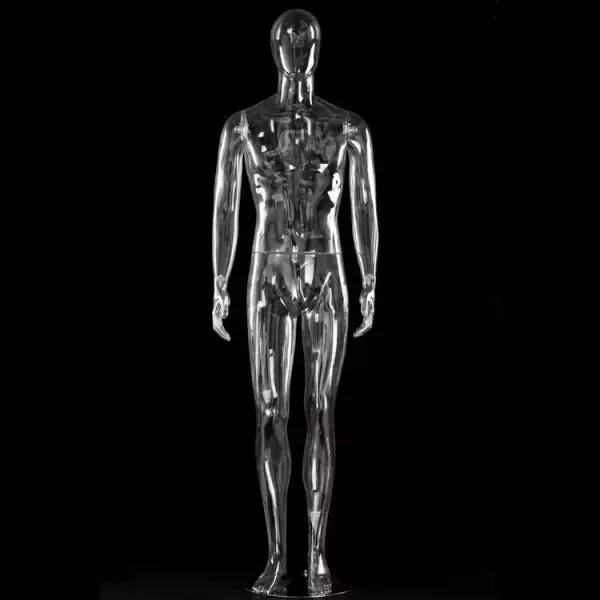
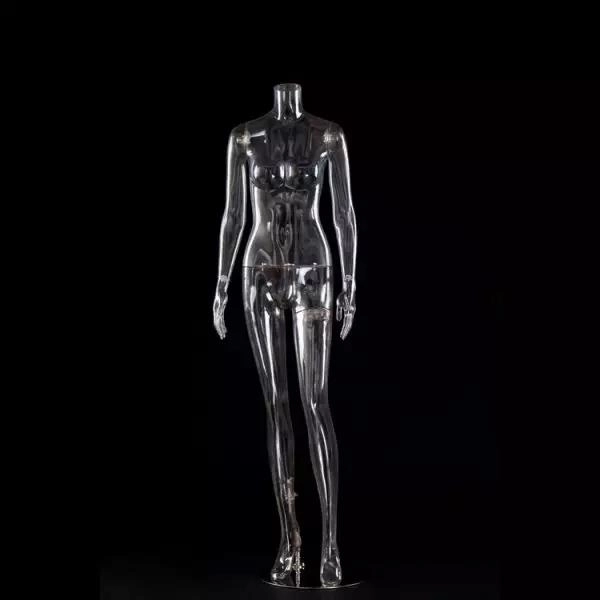
This is where a headless design becomes useful. Instead of adding another strong visual feature to the display, it provides the body structure needed to hold and shape clothing while leaving more room for the garment, lighting, background, and other merchandising elements to define the scene. The Female full-body model (without head) is an example of this approach, combining a headless full-body form with transparent PC construction.
Why Remove the Head From a Female Mannequin?
A traditional female mannequin with a head can create a complete human figure, but the head also introduces additional visual information. Facial features, hair, makeup, and head direction can influence where shoppers look first.
That can be useful when the mannequin itself is intended to create a particular character. However, it is not always desirable when the main objective is to showcase the clothing.
A headless mannequin takes away those distractions. The viewer sees the overall silhouette and garment construction without being directed toward a face or hairstyle. This can be particularly practical for stores that regularly change collections and do not want the mannequin's appearance to dictate the style of every display.
For example, a retailer may use the same mannequin to display a summer dress one week and a structured jacket or knitwear collection the next. A neutral, headless form can adapt to both without creating a strong character that conflicts with the clothing.
Minimalist Form Can Make Clothing the Visual Focus
The purpose of a mannequin is ultimately to present clothing in three dimensions. The body needs enough structure to show how a garment sits, but it does not necessarily need to dominate the display.
This distinction becomes important in minimalist retail interiors. When a store uses neutral walls, simple fixtures, limited graphics, and carefully controlled lighting, a highly detailed mannequin can introduce visual complexity that is not needed.
A headless female mannequin can fit more naturally into this environment. The simplified upper section allows the garment's neckline, shoulders, collar, sleeves, and overall silhouette to remain visible without competing with a face.
This is especially relevant for clothing where the design itself carries most of the visual message. A tailored blazer, flowing dress, oversized shirt, or structured knitwear piece can be presented with fewer competing details around the neckline and upper body.
The result is not necessarily a more dramatic display. Instead, it can be a more controlled one.
Transparent Construction Adds Another Layer of Visual Simplicity
The headless design is only one part of the display concept. The Female full-body model is also part of the Transparent Mannequins range and is manufactured from PC raw material.
A transparent mannequin behaves differently from a solid colored mannequin because its body does not introduce another dominant surface color into the display. The clothing can remain the strongest visual element, while the surrounding environment continues to show through the mannequin.
This can be useful when the background is intentionally part of the merchandising concept. For example, a transparent figure can be positioned in front of a graphic wall, illuminated panel, textured surface, or carefully arranged store fixture without completely blocking the visual relationship between the mannequin and its surroundings.
The combination of transparency and a headless structure therefore creates two layers of visual restraint. The transparent material reduces the impact of the mannequin's body, while the absence of a head reduces the amount of human detail.
How Body Proportions Affect the Final Display
Minimalist design does not mean that proportions become less important. In fact, the opposite can be true.
When there are fewer decorative elements, the silhouette of the mannequin becomes more noticeable. The proportions need to work with the garments being displayed so that clothing does not appear distorted or poorly fitted.
The Female full-body model (without head) has an overall height of 171 cm, or 67.32 inches. Its listed measurements include a 64 cm waist and an 89 cm hip. The product specification also lists an 85 cm head measurement, while the mannequin itself is designed without a head.
These measurements provide useful reference points when selecting clothing for the display. A fitted garment should be evaluated against the mannequin's waist and hip dimensions, while longer garments need to be considered in relation to the overall 171 cm height.
For retailers, this is a practical selection issue. A mannequin may look appropriate in isolation but produce a different result once a garment is dressed on it. Checking dimensions before purchasing multiple units can help reduce problems with fit, proportions, and the way a collection looks across a display.
Which Clothing Categories Suit a Headless Display?
Headless mannequins are not limited to one type of fashion. Their strongest advantage is that they allow different garments to take control of the visual presentation.
Dresses are one obvious application. Without a face competing with the neckline and upper section, attention can remain on the cut, fabric, waistline, and overall length of the dress.
Jackets and blazers can also benefit from the simplified upper structure. Details such as lapels, collars, shoulder construction, and layering can remain visually clear.
For knitwear and casual clothing, a headless form can create a relaxed and less character-driven presentation. The retailer can style the mannequin with a sweater, trousers, skirt, or layered outfit without needing to coordinate the clothing with a specific facial or hairstyle concept.
The same principle can work for seasonal collections. Instead of redesigning the mannequin itself for each campaign, the retailer can change the clothing and surrounding display elements while keeping the mannequin visually neutral.
Headless Mannequins in Window Displays
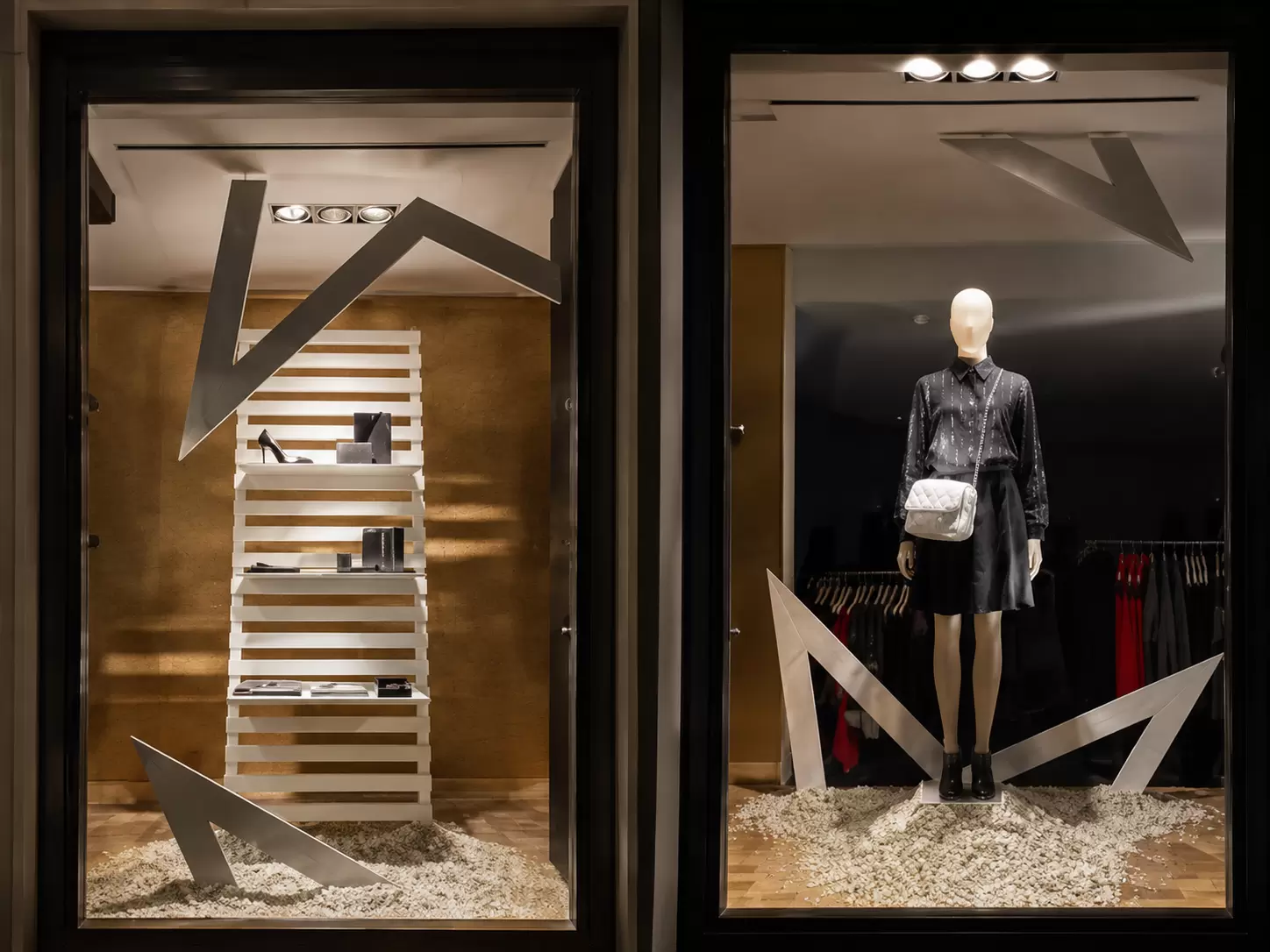
Window displays often have limited space, which makes every visual element important. A mannequin with a detailed head can become a focal point even when the clothing is supposed to be the main attraction.
A headless design offers another option. It can support the garment while allowing signage, lighting, architectural elements, or campaign graphics to occupy more of the visual field.
Transparent construction can reinforce this effect. When the mannequin has less visual weight, the display team has more freedom to build layers behind and around the figure.
For example, a retailer could place a transparent headless female mannequin in front of a colored lighting installation. The garment remains clearly visible, but the background does not disappear behind a solid mannequin body.
This type of arrangement is particularly suitable for modern stores where the window is designed as a complete visual composition rather than simply a row of dressed figures.
When a Headless Design May Not Be the Right Choice
A headless mannequin is not automatically suitable for every retail concept.
If a brand relies heavily on lifestyle storytelling, realistic human characters, or detailed styling around the face and hair, a traditional full mannequin may communicate the concept more effectively.
The choice should therefore be based on the role the mannequin needs to play. If the mannequin is primarily a support for clothing, a simplified form can be useful. If the mannequin itself is part of the storytelling, a more detailed figure may be appropriate.
Retail teams should also consider the type of garments being displayed, the store interior, lighting conditions, and whether the mannequin will be used across multiple collections.
The goal is not to choose the simplest mannequin available. It is to choose a form that supports the intended visual message without creating unnecessary elements.
How Posh Concept Connects Design With Manufacturing
The development of a transparent headless mannequin also reflects changes in mannequin manufacturing. Posh Concept Mannequins, also known as SHANGMEI, has built its business around material development, manufacturing technology, and sustainable mannequin solutions for global retail brands.
Founded in 2012, Posh Concept began applying blow molding technology to retail mannequins, with PC mannequins becoming an early major sustainable display solution. Over time, the company expanded its material systems to include PP, PE, and ABS while continuing to improve customization and production efficiency.
Its development has also included recycled material applications. In 2023, ocean recycled PP materials were introduced into mannequin production, followed by continued exploration of recycled and lower-impact materials in later years.
Today, Posh Concept Mannequins operates a 10,000 m² production facility with more than 100 professionals and a dedicated engineering team. Its stated manufacturing capacity is more than 5,000 mannequins per month, with products exported to more than 30 countries and regions.
This manufacturing background is relevant when retailers are selecting display products for repeated commercial use. The appearance of a mannequin is only one consideration. Material selection, production consistency, customization, and manufacturing capability all influence whether a display solution can be integrated into a larger retail program.
Making the Mannequin Less Noticeable
The most useful feature of a minimalist mannequin can sometimes be what it does not add to the display.
A headless design removes facial and hairstyle details. A transparent body reduces the visual impact of the mannequin's surface. Together, these characteristics can create a display foundation that supports the garment without competing strongly with it.
For retailers working with clean interiors, changing seasonal collections, fashion-led window displays, or product-focused visual merchandising, this approach can provide practical flexibility.
The Female full-body model (without head) combines a 171 cm full-body structure, transparent PC material, and a headless design for retailers looking for a more restrained way to present women's clothing. Rather than making the mannequin the center of attention, it gives the garment and the surrounding retail environment more space to define the display.