

 English
 Italian
 Spanish
 Japanese
 Swedish
 Portuguese
 Lithuanian
 Dutch
 Korean
 Russian
 French
 German
 Arabic
How to Display Men's Trousers on a Middle-Leg Mannequin
Men's trousers are often evaluated through details that are easy to overlook when they are folded or placed on a shelf. The shape of the legs, the position of the waistband, the way the fabric falls, and the proportions of the cut all influence how customers perceive a pair of trousers. In a retail environment, presenting these details clearly can help shoppers understand a garment before trying it on.
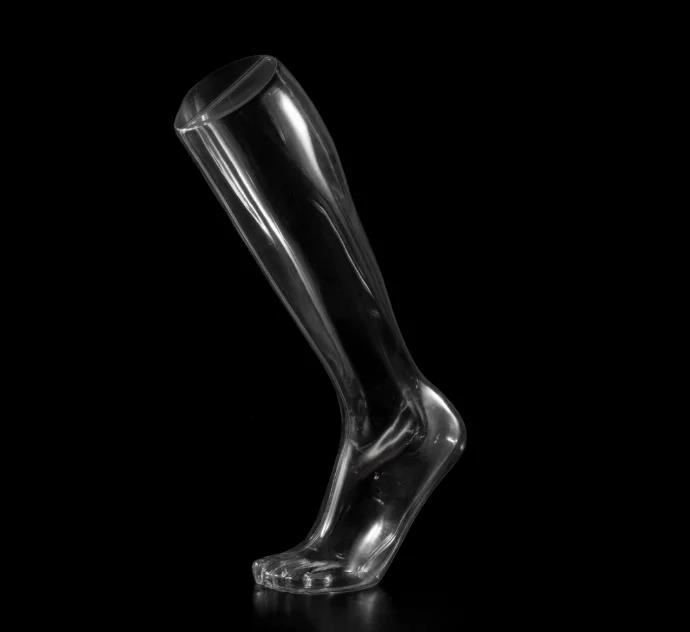
A mannequin designed specifically for lower-body display offers a practical way to present men's trousers without requiring a full-body figure. It allows retailers to focus attention on the garment itself while making better use of display space. A Male middle-leg model is particularly suitable for this purpose, providing a defined leg form for showcasing men's bottomwear in retail stores, showrooms, and product presentation areas.
However, effective trouser display involves more than simply putting a garment onto a mannequin. The fit, styling, positioning, and surrounding display arrangement all influence the final presentation.
Why Use a Middle-Leg Mannequin for Men's Trousers?
Traditional full-body mannequins are useful for presenting complete outfits, but they are not always necessary when the main display objective is to promote trousers. A middle-leg mannequin provides a more focused presentation, allowing customers to pay attention to the cut, fabric, and construction of the lower garment.
This format can be useful in several retail situations.
For stores with limited display space, a middle-leg model can be placed on a counter, display shelf, or dedicated presentation platform. Retailers can create a focused product display without allocating the space required for a complete mannequin.
It is also suitable for stores that want to highlight specific garment categories. Instead of presenting a complete outfit, retailers can arrange several lower-body display forms to showcase different trouser styles, colors, or seasonal collections.
For product photography and showroom presentations, a middle-leg mannequin can help maintain a consistent visual reference across different garments. This is particularly useful when a retailer needs to compare several styles within the same product category.
Preparing Men's Trousers Before Display
The quality of a trouser display depends partly on how the garment is prepared. Even a well-designed mannequin cannot present a garment effectively if the trousers are wrinkled, incorrectly positioned, or poorly fitted.
Before mounting trousers, retailers should check the following details:
Remove visible creases caused by storage or transportation, following the garment's care instructions.
Check the waistband and fastening area to ensure they are properly aligned.
Confirm that the left and right legs hang evenly.
Smooth out unnecessary fabric folds around the thighs and knees.
Check the hem position and make sure both legs have a consistent appearance.
These steps are especially important when displaying tailored trousers. Creases and uneven fabric distribution can change the perceived shape of the garment and make the display look untidy.
For casual trousers, the preparation process may be less formal, but the garment should still be arranged to show its intended silhouette. The goal is not to make every pair look identical, but to present each style in a way that reflects its actual design.
Positioning the Waistband and Trouser Legs
The waistband is one of the most important visual reference points when displaying men's trousers. If it sits too high, too low, or unevenly on the mannequin, the overall proportions of the garment may appear distorted.
Retailers should begin by aligning the waistband with the corresponding waist area of the display form. The fastening should remain in its intended position, and the waistband should not be unnecessarily stretched or folded.
Next, check how the fabric falls from the hip area toward the thighs and knees. The garment should follow the form naturally rather than being pulled tightly in an attempt to create an artificial silhouette.
The trouser legs should also be checked individually. Uneven positioning can make one leg appear longer or wider than the other. A consistent arrangement helps customers compare the garment's shape more easily.
When using a Male middle-leg model, retailers should pay particular attention to the visible relationship between the waistband, upper leg, and lower leg. This helps communicate the intended cut without relying on a complete mannequin or additional styling elements.
Matching Different Trouser Styles to the Display Form
Not all men's trousers should be presented in the same way. Different cuts and fabric constructions create different visual effects, so the display arrangement should reflect the characteristics of each garment.
Straight-Leg Trousers
Straight-leg trousers have a relatively consistent width from the thigh toward the hem. When displaying this style, retailers should focus on keeping both legs aligned and allowing the fabric to fall naturally.
Avoid pulling the fabric too tightly around the thighs, as this can make the trousers appear slimmer than their intended design. A clean front view is often sufficient to communicate the overall cut.
Slim-Fit Trousers
Slim-fit trousers have a narrower silhouette, particularly around the thighs and lower legs. Their display should make the shape visible without creating excessive tension around the garment.
Retailers should check that the waistband is secure and that the fabric is distributed evenly. Wrinkles caused by incorrect positioning can make the trousers appear smaller or less comfortable than intended.
Relaxed-Fit and Wide-Leg Trousers
Relaxed-fit and wide-leg styles require enough visual space to communicate their looser proportions. If the fabric is compressed or folded excessively, the defining feature of the garment may be lost.
The legs should be arranged so that their natural width remains visible. Retailers can also use a slightly wider spacing between adjacent display forms to prevent the garments from visually merging into one another.
Denim and Workwear Trousers
Denim and workwear styles often include visible construction details such as reinforced seams, pockets, rivets, and distinctive stitching.
When displaying these garments, retailers should ensure that the main details remain visible. The front pockets, fly area, side seams, and waistband should not be hidden by unnecessary folds or accessories.
A focused lower-body display can be particularly useful for highlighting these details without distracting customers with unrelated styling elements.
Using Transparent Mannequins to Keep Attention on the Garment
The appearance of the display form can influence how customers view the clothing. In some retail environments, a visually prominent mannequin may compete with the garment for attention.
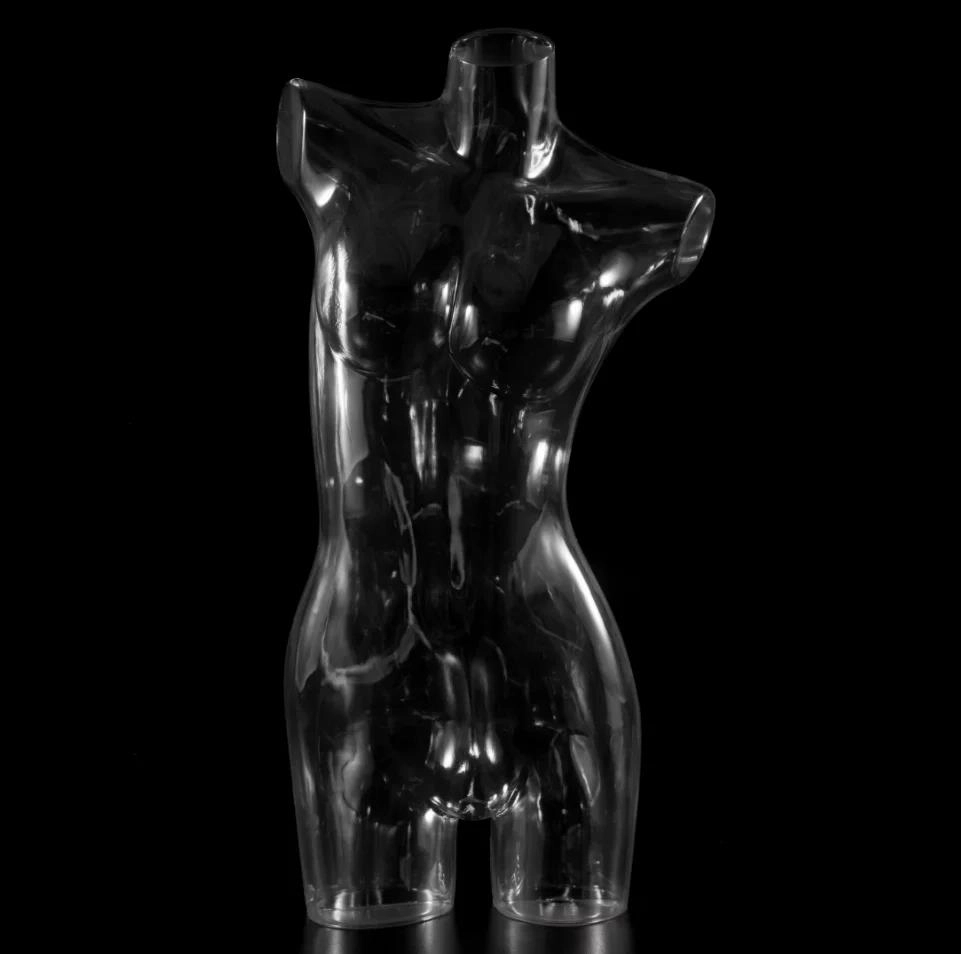
Transparent mannequins offer a different approach. Their clear appearance can reduce visual distraction and help the garment remain the main focus of the display. This is useful when presenting trousers with distinctive colors, patterns, stitching, or fabric textures.
The Male middle-leg model belongs to the Transparent Mannequins range and is manufactured using PC raw material. Its overall height is 51 cm (20.08 inches), providing a defined display form for men's lower-body garments.
PC is commonly used in transparent product applications, but retailers should still evaluate the actual appearance, surface condition, and structural requirements of the model before choosing it for a particular display environment.
Lighting also deserves attention. Strong reflections from nearby lighting or windows may affect the visibility of transparent surfaces. A controlled lighting arrangement and a suitable background can help maintain a clear view of the trousers.
Planning Retail Displays Around a 51 cm Model
The height of a display form affects where it can be placed and how customers interact with it. A model measuring 51 cm can be considered when planning counter displays, shelf arrangements, showroom presentations, and dedicated product areas.
Before installation, retailers should measure the available display space rather than relying only on the model's height. The depth and width of the display area, the position of the supporting structure, and the viewing angle should also be considered.
For a counter display, the mannequin should be positioned so that customers can see the garment without having to look around other products. On a wall-mounted or tiered display, the height should allow the waistband and leg shape to remain visible from the normal viewing position.
When several models are displayed together, consistent spacing helps create a more organized presentation. Retailers can group trousers by cut, color, collection, or intended use, depending on the purpose of the display.
Choosing a Suitable Mannequin Material and Structure
Material selection is another consideration when purchasing display forms for retail use. The material influences the appearance of the model, its handling characteristics, and its suitability for the intended environment.
The Male middle-leg model uses PC material. When evaluating a PC display form, buyers should consider transparency, surface quality, structural stability, and the practical requirements of repeated handling.
Retailers should also confirm how the model is supported during display. The mounting method, compatibility with existing display fixtures, and ease of changing garments can affect day-to-day store operations.
For buyers planning larger display projects, it is useful to confirm product dimensions, material specifications, packaging arrangements, and customization requirements before placing an order. These checks help ensure that the selected model is compatible with the store's existing visual merchandising system.
Posh Concept Mannequins: Manufacturing Experience in Retail Display Solutions
Posh Concept Mannequins, also known as SHANGMEI, was founded in 2012 with a focus on applying blow molding technology to retail mannequins. PC mannequins were among its first major sustainable display solutions, helping establish the company's approach to material innovation and manufacturing development.
The company has since expanded its material systems beyond PC to include PP, PE, and ABS. Its development has also included the introduction of ocean-recycled PP materials and continued investment in digitalization and intelligent manufacturing.
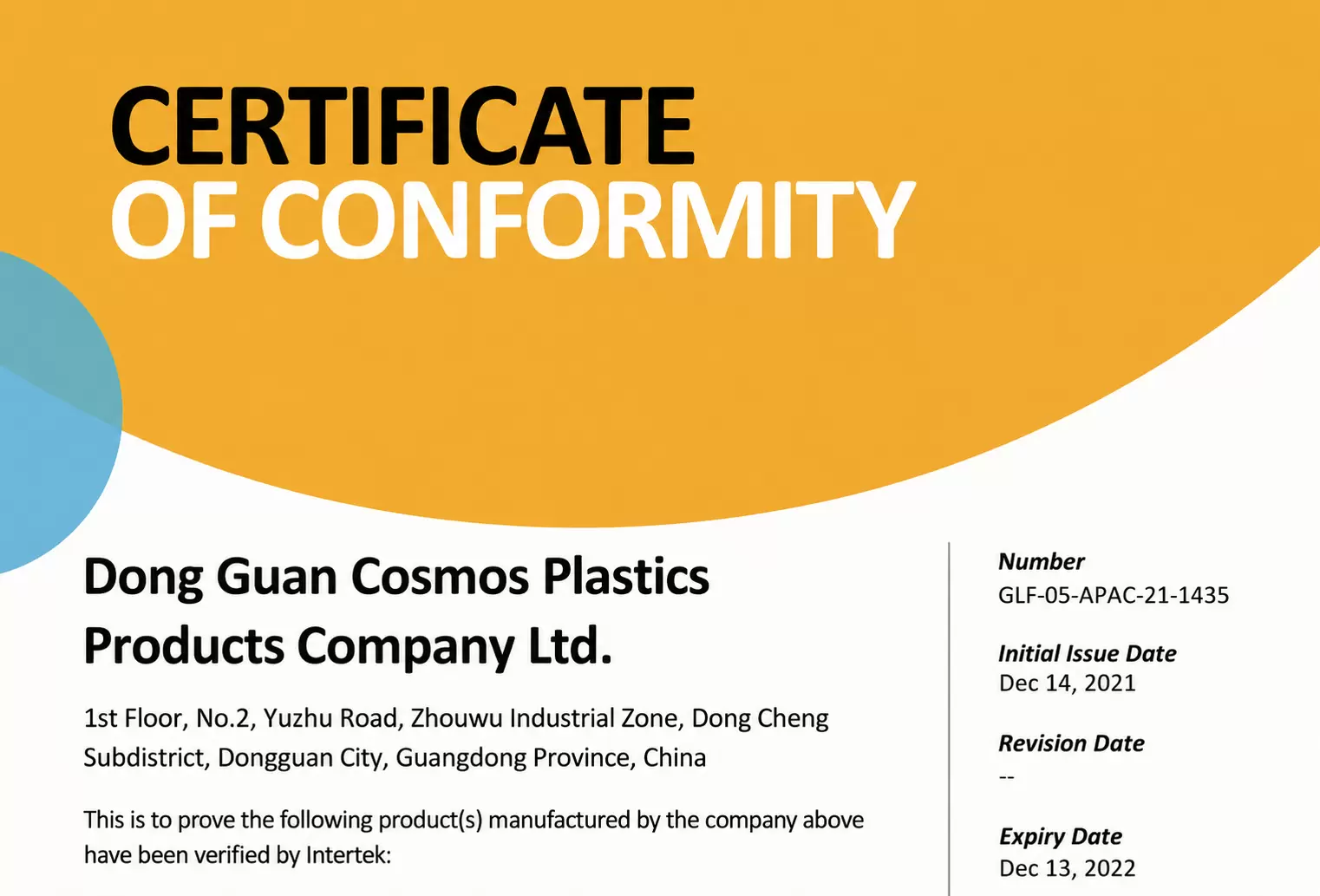
Posh's manufacturing background is supported by Cosmos Machinery Group, which brings more than 60 years of engineering and manufacturing experience. SHANGMEI operates a 10,000-square-meter production facility with more than 100 professionals and an engineering team dedicated to mannequin manufacturing. Its stated production capacity exceeds 5,000 mannequins per month, with products exported to more than 30 countries and regions.
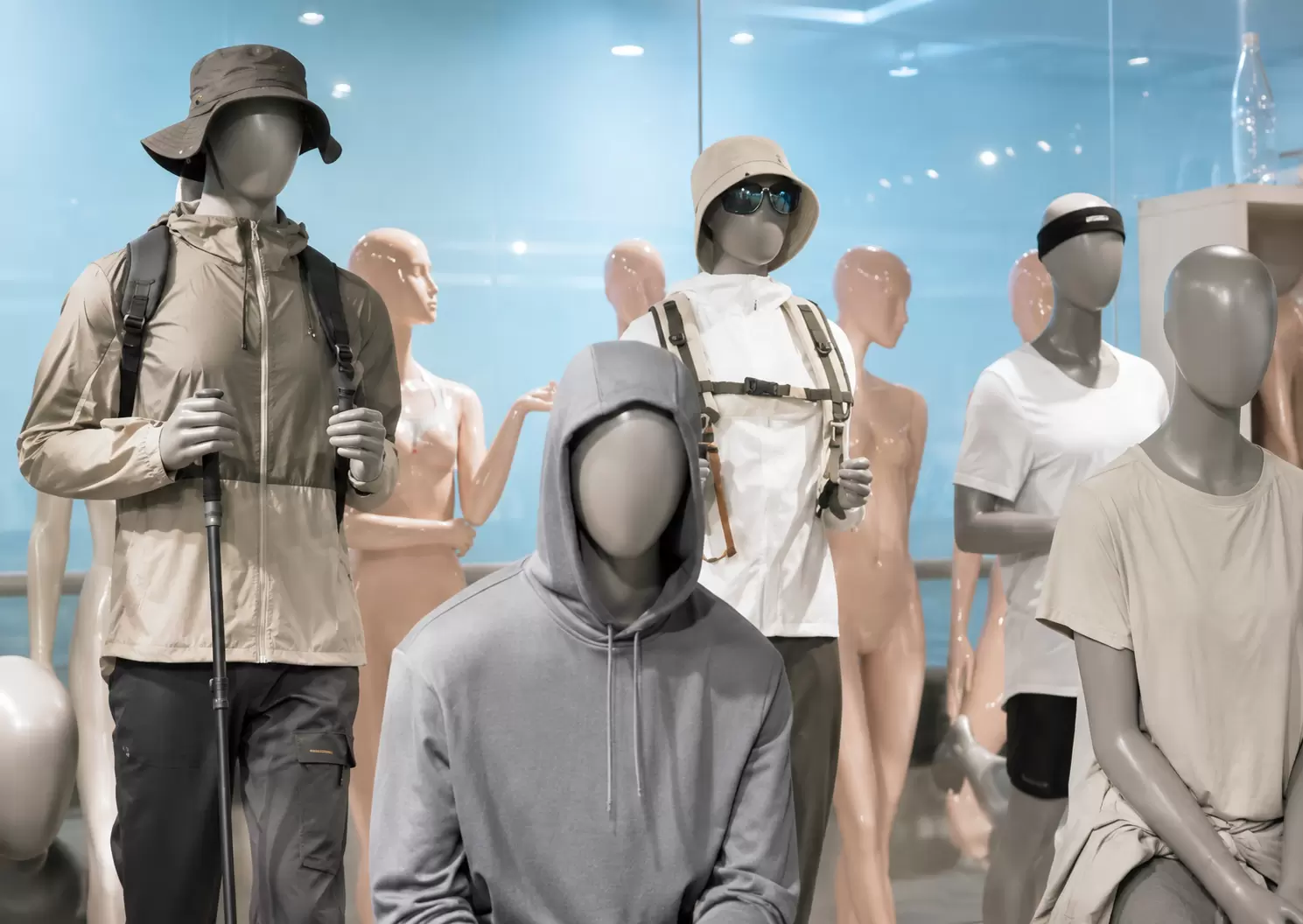
The company has also developed relationships with international retail brands. Its milestones include collaborations with H&M, Decathlon, BONAMI, and adidas, reflecting its experience in supplying mannequin solutions for different retail environments.
For retailers and distributors, this manufacturing experience is relevant when evaluating product consistency, material development, production capability, and the ability to support different display requirements.
Creating a Clearer Presentation for Men's Bottomwear
A successful men's trouser display should make it easy for customers to understand the garment's cut, proportions, fabric, and construction. The right display form provides a useful foundation, but careful garment preparation, balanced positioning, suitable lighting, and thoughtful placement are equally important.
A Male middle-leg model offers a focused solution for retailers who want to present men's trousers and other lower-body garments without using a complete mannequin. Its transparent PC construction and 51 cm height make it a practical option for selected counter, shelf, showroom, and retail display applications.
With its experience in mannequin manufacturing, material innovation, and global retail supply, Posh Concept Mannequins continues to develop display solutions for changing fashion retail requirements. By matching the display form to the garment category and the available retail space, businesses can create more organized presentations that keep attention where it belongs: on the clothing itself.