

 English
 Italian
 Spanish
 Japanese
 Swedish
 Portuguese
 Lithuanian
 Dutch
 Korean
 Russian
 French
 German
 Arabic
46 cm Female Short-Chested Model: Planning Compact Upper-Body Displays
Retail display space is not always designed for full-length mannequins or large upper-body forms. In smaller stores, countertop presentations, product photography areas, and compact merchandising fixtures, the dimensions of a display model can influence how effectively a garment is presented. Choosing a suitable model means considering not only the clothing itself but also the available space, the intended viewing angle, and the amount of garment detail that needs to remain visible.
The Female short-chested model from Posh Concept Mannequins is designed with a compact overall height of 46 cm (18.11 inches) and a bust measurement of 86 cm (33.86 inches). Manufactured from PC material, it belongs to the Solid-Color Mannequins range. These specifications provide useful reference points for retailers and sourcing teams planning upper-body apparel displays where a shorter display form is preferred.
Understanding how its dimensions relate to garment coverage and retail fixture planning can help buyers determine whether this model is appropriate for their merchandising requirements.
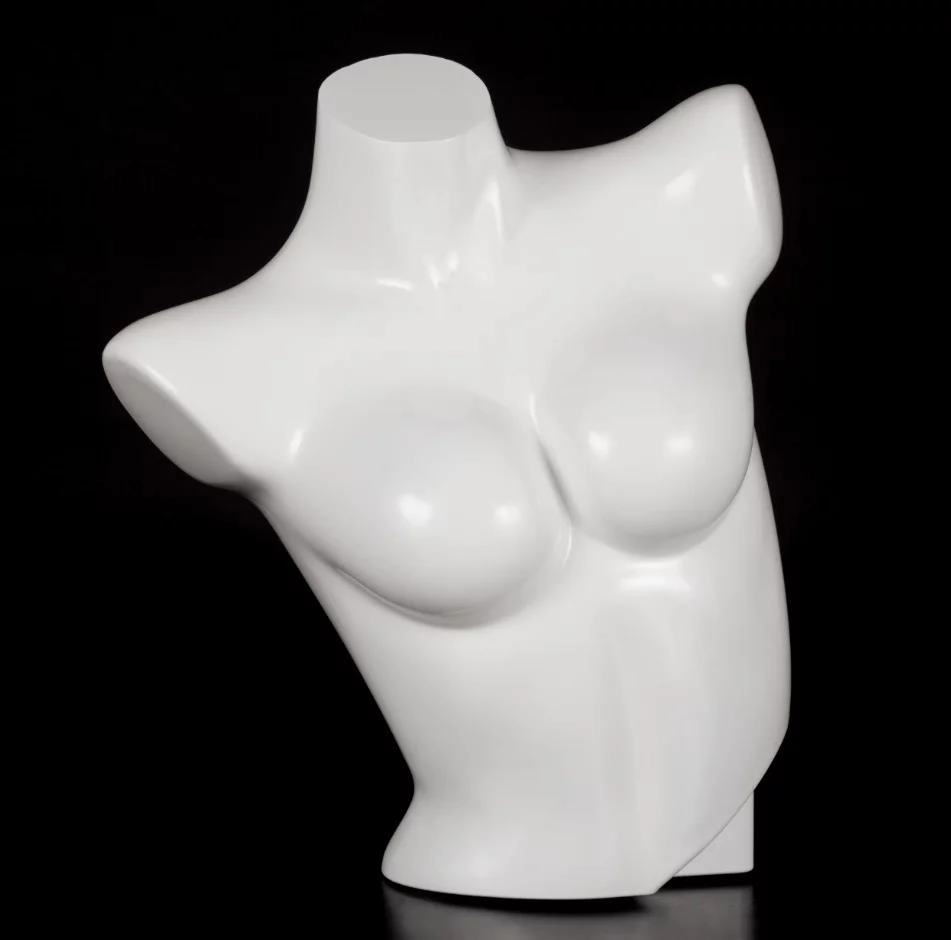
Understanding the 46 cm Height and 86 cm Bust
Two specifications are particularly important when evaluating this product: its overall height and bust measurement.
The overall height is 46 cm, equivalent to approximately 18.11 inches. This relatively compact vertical dimension provides a starting point for planning displays in locations where a taller mannequin may occupy more space than necessary.
The bust measurement is 86 cm, or approximately 33.86 inches. This dimension is relevant when evaluating the fit of women's upper-body garments, especially around the chest, front panels, and garment closures.
The main product specifications are listed below:
| Specification | Metric | Imperial |
|---|---|---|
| Product | Female short-chested model | Female short-chested model |
| Material | PC | PC |
| Overall Height | 46 cm | 18.11 in |
| Bust | 86 cm | 33.86 in |
| Product Range | Solid-Color Mannequins | Solid-Color Mannequins |
These figures should be considered together. Height determines the model's vertical dimensions, while bust circumference provides a reference for evaluating how garments sit across the upper torso.
For purchasing teams, confirming both measurements before ordering is more useful than selecting a mannequin based on its general appearance alone.
Why Compact Upper-Body Dimensions Matter in Retail Displays
Display fixtures come in different sizes and configurations. A countertop display, a narrow product shelf, and a dedicated apparel presentation area each have different spatial requirements.
A shorter mannequin can be considered when the display objective is to highlight the upper portion of an outfit without using the vertical space associated with a full-length form.
For example, a retail store may want to present a new collection of women's tops on a raised display table. A compact model can help keep the presentation focused on the garments while leaving additional visual space for product information, accessories, or coordinated merchandise.
There are several situations where overall height deserves particular attention:
Countertop presentations: Check whether the model fits within the available vertical clearance.
Shelf displays: Consider the distance between the shelf surface and the fixture above it.
Window merchandising: Evaluate how the model appears from the main customer viewing angle.
Product photography: Confirm that the model fits within the camera framing and background arrangement.
Multi-product displays: Consider how much space remains for additional garments or merchandising elements.
The 46 cm height of this model gives buyers a specific measurement to use during these checks. However, the final space requirement should also account for the garment, its collar or neckline, and any display accessories.
Matching the 86 cm Bust with Women's Upper-Body Garments
Bust measurement is one of the main references when determining whether a mannequin is suitable for displaying a particular garment.
The 86 cm bust specification of this model can be compared with the garment's actual chest measurements and construction. This is especially important for fitted apparel, where small differences in dimensions may affect the appearance of the front panels and side seams.
When preparing a garment for display, merchandising teams should inspect several areas.
Front closure: For buttoned shirts, jackets, or tops, check whether the buttons remain aligned and whether the front panels close without excessive tension.
Bust shaping: Garments with darts, curved seams, or shaped panels should be checked to see whether their construction details sit naturally on the model.
Fabric tension: Stretch materials may adapt to the mannequin's dimensions, but excessive stretching can change the intended appearance of the garment.
Neckline position: Round necks, V-necks, and other neckline designs should retain their intended shape after the garment is positioned.
Side seams: Check whether the seams remain reasonably straight and whether the fabric develops unnecessary folds around the torso.
The female short-chested mannequin offers a defined 86 cm bust reference for these evaluations. Buyers should compare the product specification with the actual garment measurements rather than relying solely on general clothing size labels, which can vary between brands and collections.
Which Garments Are Suitable for Short-Chested Display Forms?
The suitability of a short-chested model depends on how much of the garment needs to be displayed and which construction details are most important.
For women's T-shirts and casual tops, the focus is usually on the neckline, shoulder area, chest graphics, and front fabric presentation. A compact display form can be useful when the main objective is to show the upper portion of the garment without requiring a full-body presentation.
Sleeveless tops provide another application. Since these garments expose the shoulder and armhole areas, buyers should check that the neckline and armhole edges remain properly positioned after dressing the model.
For fitted tops, the 86 cm bust measurement becomes an important reference. The garment should sit naturally across the chest without excessive pulling or distorted seams.
Lightweight knitwear can also be considered. However, stretch fabrics should be checked carefully because their appearance may change when placed over a display form with different dimensions from the garment's intended fit.
Before choosing a model for a specific apparel category, retailers should consider:
Whether the garment's main design features are located in the upper torso.
Whether the garment length is appropriate for the model's shorter dimensions.
Whether the neckline and shoulder details remain visible.
Whether the bust measurement is compatible with the intended garment size.
Whether the display arrangement allows the garment to hang naturally.
These checks help distinguish between garments that benefit from compact upper-body presentation and those that require a longer torso or a different mannequin structure.
Short-Chested Models and Full-Torso Forms: Planning Display Coverage
Not every apparel presentation requires the same amount of mannequin coverage. The choice between a short-chested model and a longer torso form should be based on the garment's design and the display objective.
A shorter model may be appropriate when the emphasis is on the neckline, shoulders, chest area, and upper garment construction. It can also be considered when the display fixture has limited vertical clearance.
A longer torso form may be more suitable when the garment's waist shaping, lower panels, or extended body length need to be shown.
For example, a cropped top may not require extensive lower-torso coverage if its main design details are concentrated around the chest and neckline. In contrast, a longer fitted top may require additional display length to demonstrate its complete silhouette.
This distinction is important when retailers plan displays for multiple garment categories. Selecting a model based on the actual garment coverage requirement can prevent unnecessary space consumption and make product presentations more consistent.
The Female short-chested model provides a compact alternative for buyers evaluating upper-body display configurations. Its 46 cm overall height offers a clear dimensional reference when comparing it with other mannequin formats.
PC Material and Its Application in Mannequin Manufacturing
Material selection is another factor that influences mannequin production and product evaluation.
This model is manufactured from PC, also known as polycarbonate, a thermoplastic material used in various engineered applications. In mannequin manufacturing, material selection needs to be considered alongside forming technology, structural requirements, surface appearance, and production consistency.
PC has a particularly important place in the development of Posh Concept Mannequins. When the company was founded in 2012, it introduced blow molding technology into retail mannequin production, with PC mannequins becoming one of its first major sustainable display solutions.
The company subsequently expanded its material systems beyond PC to include PP, PE, and ABS between 2017 and 2020. This development increased the range of material options available for different mannequin applications and customization requirements.
For buyers considering PC display models, several aspects deserve attention:
Material identification: Confirm the specified raw material before production.
Surface appearance: Review the expected finish and consistency under retail lighting.
Product dimensions: Verify that the finished model meets the required height and bust specifications.
Manufacturing process: Understand how the selected forming process relates to the finished product.
Application requirements: Match the material and model configuration with the intended display environment.
The combination of PC material and compact dimensions makes this model a specific option within the Solid-Color Mannequins range. Buyers should still evaluate the actual product finish and manufacturing specifications against their project requirements.
Planning a Compact Display Without Losing Garment Details
A compact mannequin does not automatically guarantee an effective display. The way the garment is positioned and the surrounding fixture is arranged also influence the final presentation.
For example, placing a short display form too close to the back of a shelf may make the neckline difficult to see. Similarly, excessive accessories or promotional materials around the model can distract customers from the garment itself.
A practical display arrangement should consider three elements.
First, the viewing angle. The model should be positioned so that customers can see the most important garment details without needing to move around the fixture.
Second, garment positioning. The neckline, front panels, and sleeve openings should be arranged naturally. If the garment is asymmetrical or has a distinctive shoulder design, its positioning should allow those details to remain visible.
Third, surrounding space. A compact model can be used alongside folded garments, product samples, or merchandising information, but these elements should not overcrowd the display.
For product photography, the same principles apply. Camera framing should account for the model's 46 cm height and the complete garment dimensions. Lighting should also reveal fabric texture and construction details without creating distracting shadows.
These practical adjustments help retail teams make better use of limited display space while keeping attention on the apparel.
Posh Concept Mannequins: Manufacturing Experience and Sustainable Development
Choosing a mannequin supplier involves more than comparing product dimensions. Buyers may also need to consider manufacturing experience, material development, production capacity, and the ability to maintain consistent product specifications across orders.
Posh Concept Mannequins (SHANGMEI) was officially established in 2012 and is backed by Cosmos Machinery Group, bringing more than 60 years of engineering and manufacturing experience.
The company's early development focused on applying blow molding technology to retail mannequins. In 2013, Posh participated in its first exhibition in Germany, marking an important step in its international market expansion.
In 2015, the company began collaborating with international fashion brands, including H&M, which adopted its PC mannequins for retail display applications. Its partnerships subsequently expanded to include Decathlon in 2018, BONAMI in 2019, and adidas in 2022.
Material innovation has remained an important part of its development. Between 2017 and 2020, Posh expanded from PC to additional material systems, including PP, PE, and ABS. In 2023, ocean-recycled PP materials were introduced into mannequin production through the Target Project.
The company also continued upgrading its production capabilities. Digitalization and intelligent manufacturing development advanced in 2024, while its 2025 initiatives focused on further exploring recycled and lower-impact materials.
In 2026, new-generation cast aluminum formwork technology entered production. The development aims to reduce mold costs while maintaining consistent product quality and surface finishing, making customized mannequin production more accessible to global retail brands.
Today, its manufacturing capabilities are supported by three main foundations:
Hong Kong industrial heritage: More than 60 years of engineering and manufacturing experience through Cosmos Machinery Group.
Owned manufacturing base: A 10,000 m² production facility, more than 100 professionals, and a dedicated engineering team.
Global manufacturing capacity: More than 5,000 mannequins produced monthly, with products exported to over 30 countries and regions.
These resources support the company's continued development of mannequin solutions for international fashion retail and visual merchandising projects.
What Buyers Should Confirm Before Ordering
Before selecting a short-chested mannequin, buyers should compare the product specifications with their intended garments and display arrangements.
For this model, the two main dimensional references are its 46 cm overall height and 86 cm bust measurement. These should be checked against the available display space and the actual garment dimensions.
The following points can help make the purchasing process more straightforward:
Height requirements: Confirm that 46 cm is suitable for the intended fixture and presentation area.
Bust compatibility: Compare the 86 cm bust measurement with the garment's chest dimensions and construction.
Material specifications: Verify that PC is the required material for the project.
Product finish: Discuss the expected surface appearance within the Solid-Color Mannequins range.
Garment applications: Identify whether the model will primarily be used for T-shirts, sleeveless tops, knitwear, or other upper-body garments.
Order consistency: For multiple units, confirm dimensional tolerances and finish requirements with the manufacturer.
If a project requires additional measurements or a particular display configuration, buyers should request the relevant technical information before confirming production.
A Compact Display Solution for Upper-Body Apparel
Selecting the right mannequin is ultimately a matter of matching product dimensions with garment requirements and available retail space.
With an overall height of 46 cm and an 86 cm bust, the Female short-chested model provides defined specifications for buyers planning compact upper-body apparel displays. Its PC construction and inclusion in the Solid-Color Mannequins range offer additional reference points when evaluating material and product configuration.
For retailers, the key is to consider garment coverage, bust compatibility, viewing angles, and fixture dimensions together. For sourcing teams, confirming the product specifications and material requirements before ordering helps establish clear expectations throughout the procurement process.
With its engineering heritage, manufacturing resources, and continued material innovation, Posh Concept Mannequins works to rethink how mannequins are made and develop more responsible display solutions for the global fashion retail industry.
A well-planned compact display does not need to show everything. It needs to present the right garment details clearly, using a model whose dimensions match the purpose of the display.