

 English
 Italian
 Spanish
 Japanese
 Swedish
 Portuguese
 Lithuanian
 Dutch
 Korean
 Russian
 French
 German
 Arabic
How to Evaluate the Supporting Structure of a Male Half-Body Model
In a retail display, a mannequin needs to do more than present a garment. It must fit the available space, remain properly positioned during use, and work with the store's display fixtures. These practical requirements become especially important when selecting a half-body model with a supporting structure, since the support arrangement affects how the mannequin can be installed and positioned.
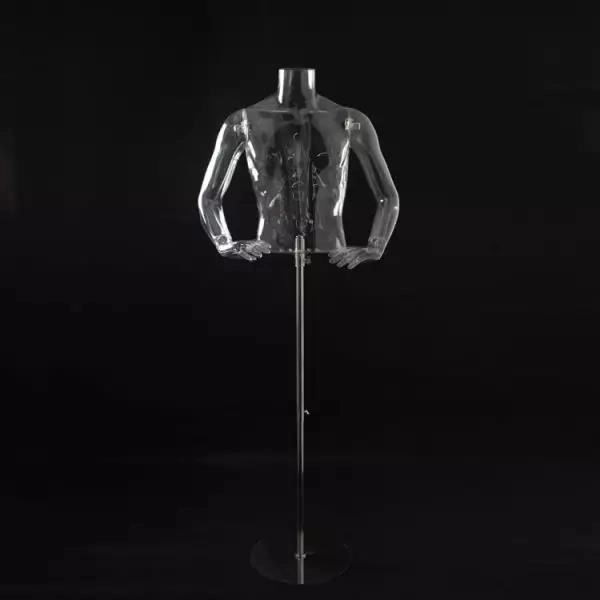
For buyers comparing display products, Male half-body model (supporting structure) is worth evaluating as a complete display unit rather than judging its appearance alone. Material, dimensions, mounting requirements, and the intended display location all contribute to whether a model fits a particular retail project. Reviewing these factors before ordering can help reduce installation issues and make product specifications easier to compare.
Start by Understanding the Supporting Structure
The first step is to clarify how the supporting structure will be used in the intended display. Different retail environments have different installation conditions. A model placed on a counter may need a different arrangement from one incorporated into a dedicated display fixture or a custom retail installation.
Before making a purchase, confirm how the mannequin is intended to be mounted, which supporting components are included, and whether additional hardware is required. Buyers should also check the installation instructions and the dimensions of the mounting area against their existing fixtures.
It is important not to assume that every supporting structure is compatible with every counter, bracket, or display system. Even when two mannequins have similar external dimensions, their mounting arrangements may differ.
A useful evaluation starts with a simple checklist: identify the intended mounting location, confirm the support configuration, measure the available installation space, and verify that the assembled display can be positioned as planned. If the mannequin will be used across multiple stores, documenting these requirements can help purchasing and visual merchandising teams work from the same specifications.
Check the Overall Height and Body Measurements
Dimensions are among the most straightforward specifications to verify, but they should always be considered in relation to the display environment.
The Male half-body model (supporting structure) has an overall height of 61 cm, equivalent to 24.01 inches. Its listed bust measurement is 96 cm (37.8 inches), and its waist measurement is 78 cm (30.71 inches).
These measurements help buyers determine whether the model is appropriate for a particular merchandising layout. For example, the overall height affects how much vertical space the display occupies, while the bust and waist measurements provide a reference for assessing how garments sit on the form.
When measuring a display counter or fixture, allow for more than the mannequin's body height alone. The supporting structure and any mounting hardware may affect the total installed height or the space required beneath or behind the model. Confirm the relevant dimensions with the supplier rather than relying only on the body measurements.
For projects involving several display units, consistent measurements also make layout planning easier. Buyers can use the stated dimensions to prepare an initial plan, then verify the actual installation requirements before finalizing the fixture arrangement.
Evaluate PC Material for the Intended Application
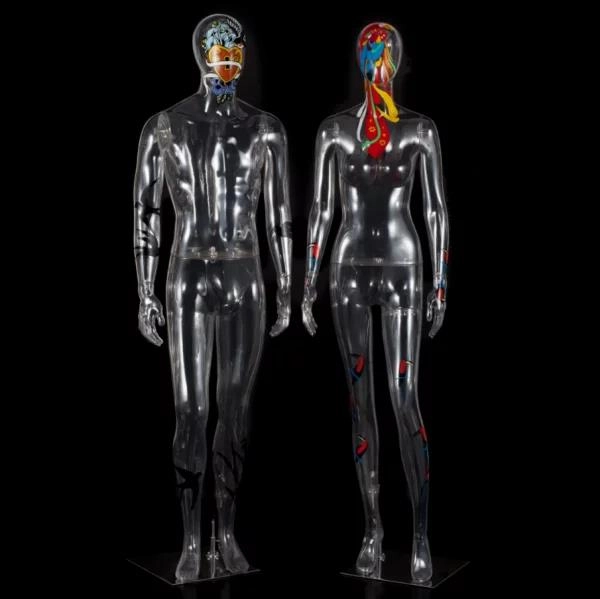
Material selection affects how a mannequin fits into a retailer's product requirements and display environment. This model is manufactured from PC, or polycarbonate, raw material and belongs to the Transparent Mannequins range.
PC is used in applications where a transparent appearance is required. In a retail setting, a transparent mannequin can allow more of the surrounding display to remain visible, which may be useful when the presentation includes layered garments, accessories, signage, or carefully arranged backgrounds.
However, material suitability should be assessed against the actual requirements of the project. Buyers should confirm the product's finish, cleaning recommendations, handling instructions, and any relevant care limitations with the manufacturer. They should not assume that transparency alone guarantees a particular level of impact resistance, load capacity, or long-term performance.
The support structure also deserves separate attention. The properties of the mannequin material do not automatically establish the load-bearing capacity of the mounting arrangement. If a project has specific stability or load requirements, ask for the applicable technical information and installation guidance.
Match the Model to the Display Environment
A supporting structure should be evaluated in the context of where and how the mannequin will be displayed. A retail counter, wall-mounted installation, showroom fixture, and temporary promotional display can present different practical constraints.
Begin by checking the usable space around the intended installation point. Measure the available height and width, and identify any nearby shelves, lighting equipment, signage, or other products that could interfere with the display. Also consider whether staff need regular access to adjust garments or clean the surrounding area.
For a counter display, the 61 cm overall height provides a useful starting point for estimating the mannequin's visual footprint. The final arrangement should still account for the mounting configuration and any additional components. Where the display is positioned close to customers, check that the support and fixture arrangement does not create an obstruction or an unstable installation.
For a showroom or multi-store rollout, repeatability matters as well. A documented installation method can help different teams reproduce the intended display without making unnecessary adjustments at each location.
Confirm Garment Fit Before Planning the Final Presentation
The mannequin's measurements should be checked against the garments selected for display. With a listed bust of 96 cm and waist of 78 cm, this model provides reference dimensions for assessing how clothing may sit across the upper body.
Garment fit depends on more than the mannequin's measurements. Fabric stretch, garment construction, cut, and intended styling can all affect the final appearance. A structured jacket, for example, may sit differently from a soft knit top even when both are designed for a similar body size.
For this reason, visual merchandising teams should test representative garments before preparing a large display. Check shoulder placement, chest tension, waist shaping, and the way fabric falls across the form. If the display includes several clothing styles, test the pieces most likely to reveal fit differences.
This process also helps teams decide whether the selected mannequin is suitable for the intended collection. The goal is not simply to put a garment on the form, but to present it in a way that reflects the product's cut and styling.
Prepare a Clear Purchasing Specification
A clear specification makes it easier to compare quotations, confirm product suitability, and reduce misunderstandings between purchasing teams and suppliers. Rather than referring only to a product name, record the details that affect the intended use.
For this model, the purchasing specification should identify the product as a male half-body model with a supporting structure, specify PC as the listed material, and record the overall height, bust, and waist measurements. Buyers should also confirm the exact support configuration, included components, installation method, and any available customization options.
If the mannequins are being purchased for several locations, clarify whether the same model and configuration will be supplied throughout the order. It is also useful to confirm packaging arrangements, handling requirements, and how product specifications will be checked before shipment.
Where a project requires specific stability or load performance, request supporting technical documentation instead of relying on assumptions based on the product's appearance. These checks are particularly useful when the mannequin must work with existing fixtures or a standardized retail display system.
Consider Manufacturing Consistency for Larger Orders
For retailers sourcing mannequins across multiple stores, product selection is only one part of the process. Manufacturing consistency, specification control, and communication with the supplier can also influence the rollout.
Posh Concept Mannequins, also known as SHANGMEI, was founded in 2012 and focuses on mannequin manufacturing and sustainable visual merchandising solutions. The company traces its manufacturing background to Cosmos Machinery Group, which brings more than 60 years of engineering and manufacturing experience. Its stated production resources include a 10,000 m² manufacturing facility, a team of more than 100 professionals, and monthly output exceeding 5,000 mannequins, with products exported to more than 30 countries and regions.
The company has also developed its material systems over time, expanding beyond PC to include PP, PE, and ABS, while continuing to explore recycled and lower-impact materials. Its manufacturing development includes work on digitalization, intelligent production, and newer mold technologies.
For buyers, these details provide useful context when discussing larger display projects. The next step is to confirm the specific production, quality-control, and customization arrangements applicable to the selected model rather than assuming that every capability applies to every order.
A Practical Final Checklist
Before approving a male half-body mannequin with a supporting structure, review five points: the intended installation location, the mounting configuration, the overall dimensions, the suitability of PC material for the application, and the garment fit required for the display.
Then confirm the product specifications with the supplier and check any installation or load requirements that are important to the project. If the order covers several stores, make sure the same configuration and measurement references are used throughout the purchasing process.
The Male half-body model (supporting structure) offers a defined starting point for this evaluation, with PC construction, a height of 61 cm, a bust measurement of 96 cm, and a waist measurement of 78 cm. By checking these specifications alongside the actual support arrangement and display conditions, retail buyers can make a more informed decision and plan an installation that suits their merchandising needs.